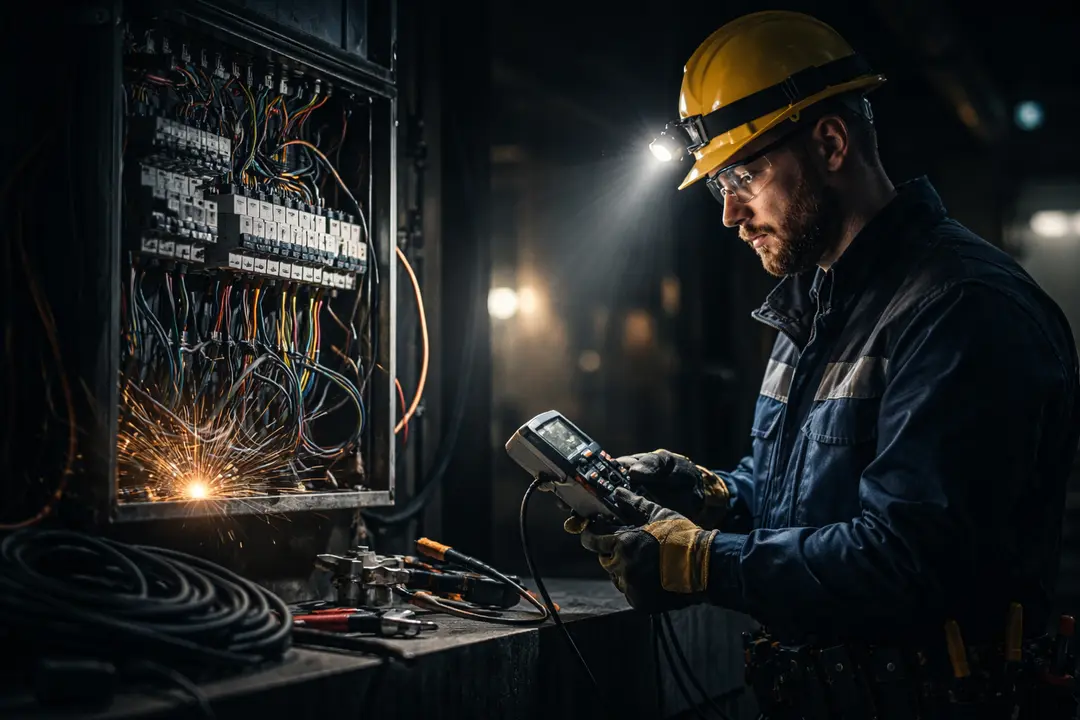
EV Charger Installation Las Vegas | Level 2 Home Charging Solutions
A standard 120V outlet delivers 3 to 5 miles of range per hour. That's not enough for daily commutes in Summerlin or Henderson. Level 2 charging at 240V provides 25 to 40 miles per hour, giving you a full charge overnight.
Fast, Efficient Charging for Every Electric Vehicle Brand
We install Level 2 charging systems for all electric vehicles. Every installation starts with a load calculation to verify your panel can handle the additional continuous load.
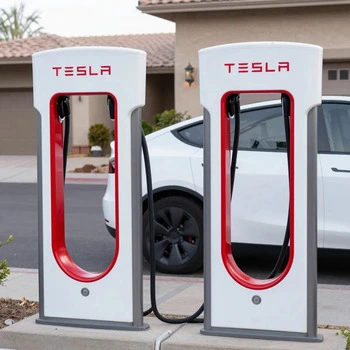
Tesla Wall Connector Certified Installation
The Tesla Wall Connector delivers up to 48 amps. This requires a 60-amp circuit per the 80% continuous load rule. We install 6 AWG copper conductors for 60-amp circuits.
Wall Connectors can be hardwired or connected through a disconnect. Hardwiring eliminates the plug connection, reducing heat generation. In Las Vegas garages exceeding 130°F, fewer connection points means fewer failures.
The Wall Connector includes Wi-Fi connectivity. We configure the unit for optimal charging schedules that avoid NV Energy peak rates.
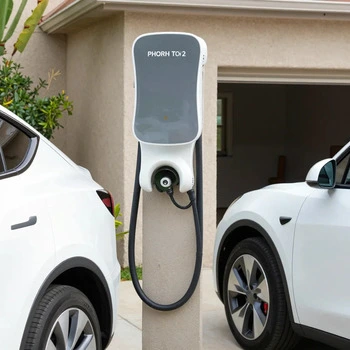
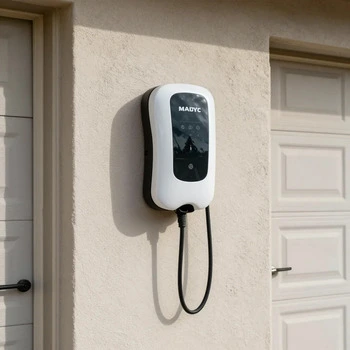
Universal J1772 Chargers (ChargePoint, JuiceBox, Emporia)
J1772 is the standard connector for non-Tesla EVs. ChargePoint, JuiceBox, and Emporia provide 32 to 48 amps of charging current requiring dedicated 40-amp or 60-amp circuits.
Many rebate programs require data-sharing capability. We install chargers that meet NV Energy's PowerShift requirements, which mandate throttling during grid stress. This qualifies you for rebates up to $500.
These chargers provide energy monitoring through mobile apps for tracking costs and scheduling off-peak charging.
NEMA 14-50 Receptacles for Mobile Connectors
Many EV manufacturers include mobile charging cables that plug into NEMA 14-50 outlets—the same 50-amp receptacle used for RVs. Installing a 14-50 outlet provides flexibility if you change vehicles.
We do not install standard residential-grade 14-50 receptacles in Las Vegas garages. The continuous 40-amp draw creates heat. Standard receptacles will overheat and fail. We install industrial-grade receptacles from Bryant or Hubbell rated for continuous duty.
A 14-50 receptacle requires a 50-amp breaker and 6 AWG copper conductors.
Navigating NV Energy Rebates & Federal Tax Credits
EV charger installations qualify for multiple incentives. Understanding these programs significantly reduces your total installation cost.
How to Qualify for the PowerShift Residential Incentive
NV Energy's PowerShift program provides rebates up to $500 for residential EV charger installations. The charger must have network connectivity and allow NV Energy to throttle charging during peak demand. This throttling occurs during extreme heat when grid capacity is strained.
Qualifying chargers include ChargePoint Home Flex, JuiceBox 40 or 48, Emporia Level 2, and others with certified load management. Tesla Wall Connectors don't currently qualify because they don't integrate with NV Energy's demand management system.
We help you select qualifying chargers and handle rebate paperwork. Rebates are processed after installation and typically arrive within 6 to 8 weeks.
Saving Up to $1,000 with Federal Tax Credits
The federal Alternative Fuel Vehicle Refueling Property Credit provides 30% of installation costs up to $1,000 for residential installations. This covers equipment, materials, and labor. You claim the credit on IRS Form 8911.
The credit applies to charger hardware, panel upgrades if needed, wiring, conduit, and labor. If your installation costs $3,500, you receive a $1,000 credit. Combined with NV Energy rebates, you can recover $1,500 through incentives.
Technical Requirements: Is Your Vegas Home EV-Ready?
Not every home can add a Level 2 charger without electrical upgrades. We assess your electrical infrastructure and determine what's needed for safe EV charging.
Load Calculations for High-Demand Desert Homes
A 48-amp charger is a continuous load requiring a 60-amp circuit. Adding 60 amps to a Las Vegas home already running dual AC units, pool equipment, and standard appliances often exceeds panel capacity.
We calculate existing loads per NEC Article 220. We add the EV charger load at 100%—no demand factors apply. If your total load exceeds 80% of panel rating, you need a service upgrade.
For homes with 100-amp service, adding a Level 2 charger usually triggers a panel upgrade to 200 amps. Two AC units pulling 60 amps, plus pool equipment pulling 15 amps, plus an EV charger pulling 48 amps, exceeds capacity.
Dedicated 240V Circuit & Breaker Installation
Every Level 2 charger requires a dedicated 240V circuit. We install a 2-pole breaker rated for the charger amperage plus 25% per continuous load requirements.
For a 48-amp charger, we install a 60-amp breaker. For a 32-amp charger, we install a 40-amp breaker. We run 6 AWG copper for 60-amp circuits or 8 AWG for 40-amp circuits in conduit.
The circuit must include a disconnect within sight of the charger or a lockable breaker.
Assessing Panel Capacity (200 Amp vs. 100 Amp)
A 200-amp panel provides 48,000 watts capacity. With the 80% continuous load limit, you can safely use 38,400 watts continuously. Dual AC units consume 7,200 watts. Pool equipment consumes 1,800 watts. An EV charger consumes 11,520 watts. That's 20,520 watts before water heaters, ranges, dryers, and household loads.
A 100-amp panel provides 24,000 watts total, 19,200 watts continuously. The three major loads above already exceed this. If you have 100-amp service and want EV charging, you need a panel upgrade.
We assess your panel during initial consultation. We open the panel, verify breaker spaces, check bus bar condition, and review load distribution. We provide written assessment of whether your service supports EV charging.
Frequently Asked Questions: Charging Your EV in Nevada
How much does a professional install cost?
Professional Level 2 charger installation costs between $1,200 and $2,500 depending on distance from panel and whether panel upgrades are needed. A straightforward garage installation 20 feet from the panel costs $1,200 to $1,500. Installations requiring long conduit runs, outdoor mounting with NEMA 3R enclosures, or panel upgrades cost $1,800 to $2,500. After federal tax credits and NV Energy rebates, net costs drop to $700 to $1,500.
Can I install an EV charger outdoors in the Las Vegas heat?
Yes, but the charger must be rated for outdoor use with NEMA 3R or 4 enclosure ratings. Chargers experience thermal stress when ambient temperatures exceed 115°F. We recommend installing chargers on north-facing walls or under shade structures. Some chargers include temperature sensors that throttle charging when internal temperatures exceed safe thresholds. We install outdoor chargers with weatherproof conduit and sealed connections. Hardwired installations handle heat better than plug-in installations because they eliminate the plug connection that generates additional heat.
How much faster is a Level 2 charger vs. a standard outlet?
A standard 120V outlet provides 1.4 kW, delivering 3 to 5 miles per hour. A 48-amp Level 2 charger provides 11.5 kW, delivering 35 to 45 miles per hour depending on vehicle efficiency. That's roughly 10 times faster. A Tesla Model 3 with a 75 kWh battery takes 50+ hours to fully charge on 120V. The same vehicle charges in 6 to 7 hours on Level 2. For daily driving, Level 2 means you wake up to a full charge. The faster charging also means less total time drawing power, which can reduce costs if you charge during off-peak hours.