Ceiling Fan Installation Las Vegas | Expert Cooling for Your Home
Ceiling fans aren't decorative in Las Vegas—they're functional cooling equipment. Running a fan allows you to increase your thermostat 4 degrees without losing comfort, cutting summer cooling costs significantly. Professional mounting is a safety requirement. Improperly mounted fans fail catastrophically.
Professional Mounting & Pre-Wiring for Las Vegas Residences
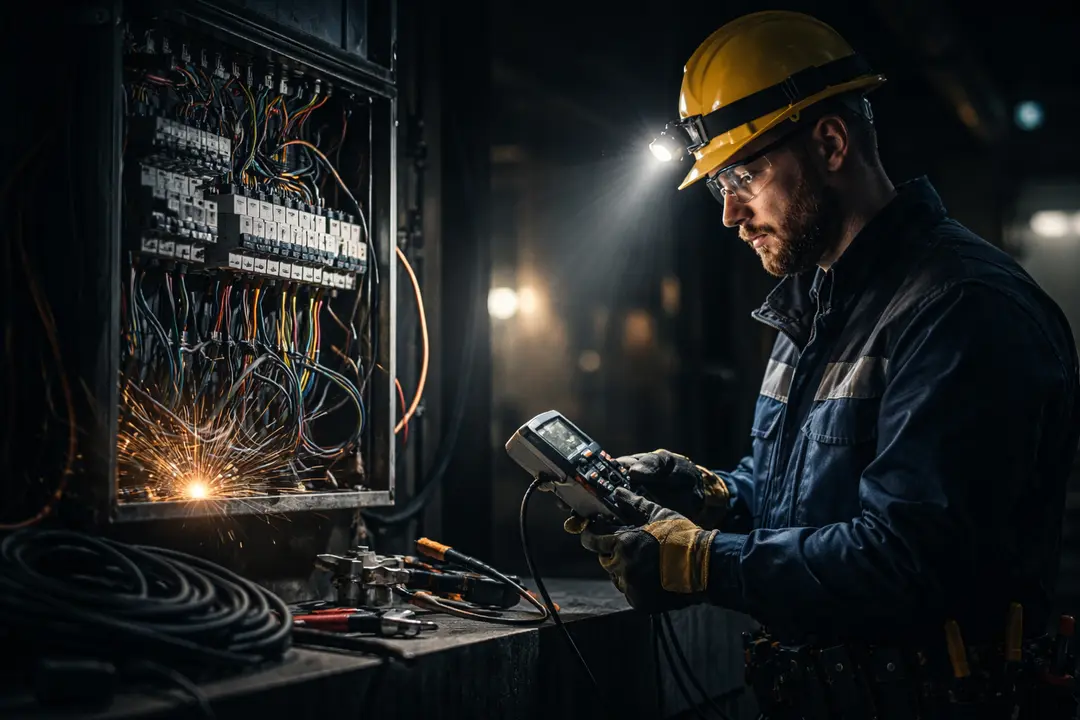
We install ceiling fans throughout the Las Vegas valley—from new construction to retrofitting older homes. Every installation starts with verifying the electrical box meets NEC 314.27 requirements for fan support. Most existing light fixture boxes don't meet this standard and must be replaced.
Safe Installation of Heavy & Large-Diameter Fans
Large-diameter fans (60+ inches) and heavy fans (40+ pounds) require robust mounting. We install fan-rated junction boxes listed for the fan's weight. UL 507 standards govern ceiling fan construction. Boxes must support 70 pounds minimum plus dynamic loading.
We install pancake boxes for attic access or old-work fan-rated boxes where attic access is limited. For heavy fans, we use box assemblies with adjustable bar hangers spanning joists.
High ceilings (10+ feet) need extended downrods to position fans 8 to 9 feet above the floor. Longer downrods increase oscillation. We balance blades and verify secure mounting.
Outdoor Patio & Gazebo Fan Setup (Wet-Rated)
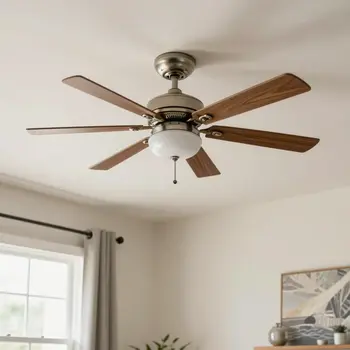
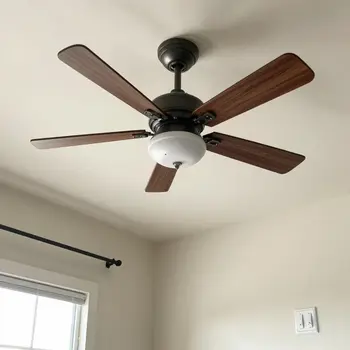
Outdoor fans require wet-rated or damp-rated construction. Wet-rated fans withstand direct rain. Damp-rated fans handle humidity but not direct water. Covered patios with solid roofs can use damp-rated fans. Pergolas and gazebos require wet-rated fans.
Las Vegas outdoor environments are harsh. Dust storms coat motors. Direct sun causes UV degradation. Monsoon rains test weatherproofing. We install only fans rated for these conditions.
Outdoor fan circuits require GFCI protection per 2023 NEC. We install weatherproof covers on switches and verify all outdoor wiring uses appropriate conduit.
Smart Fan Integration with Alexa, Google, and HomeKit
Smart fans integrate with home automation systems. We install fans with built-in Wi-Fi modules or retrofit existing fans with smart control modules.
Most smart fans require neutral wires at the switch location. Older homes wired with 14/2 Romex lack neutral at the switch. We run new 14/3 Romex to provide the neutral conductor required for smart switches.
Safety First: Is Your Electrical Box Fan-Rated?
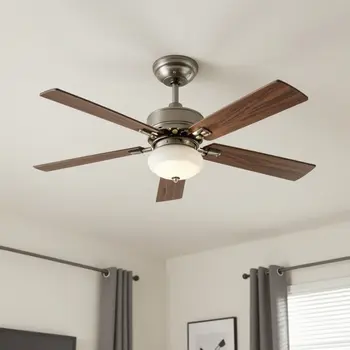
Standard light fixture boxes aren't rated for fan loads. Fans create vibration and dynamic forces that lights don't. Over time, these forces loosen mounting screws and fatigue metal. Eventually the box pulls free, and the fan falls.
As of January 11, 2026, Clark County code mandates that any ceiling outlet box designed for a fan must be specifically listed for fan support, even if currently serving a light. This addresses safety issues from homeowners installing fans on inadequate boxes.
Upgrading to Weight-Rated UL-Listed Brackets
We replace standard boxes with fan-rated boxes during every fan installation. Fan-rated boxes have deeper mounting points and use #10-32 threaded studs instead of #8-32 studs found on light boxes. These heavier studs handle dynamic loading without stripping.
For accessible attics, we install pancake boxes or bar hangers spanning between joists. For inaccessible ceilings, we use old-work fan-rated boxes with expandable wings.
We verify mounting hardware engages solid framing, not just drywall. Fans mounted only to drywall fail when vibration loosens attachment.
Identifying Brittle Attic Wiring During Replacement
Las Vegas attics reach 145°F from June through September. This degrades wire insulation. NM cable jackets become brittle. When we access ceiling boxes, we inspect the feed wiring.
Brittle insulation crumbles when touched. If the wire shows degradation, we don't just connect the new fan. Fan vibration will flex conductors, causing brittle insulation to break away completely, exposing bare copper and creating arc-fault hazards.
We replace compromised wiring back to the nearest junction box. We install new 14/3 Romex for fans with light kits or 14/2 for fans without lights.
The Impact of Ceiling Fans on Your NV Energy Bill
Ceiling fans create air movement that increases evaporative cooling, making you feel 4 degrees cooler. This allows setting your thermostat 4 degrees higher. The fan uses 50 to 75 watts. Your AC uses 3,500 watts. The savings are substantial.
This effect is called destratification. Fans break up stratified air layers, distributing air evenly. This helps your AC maintain consistent temperatures without longer cycles.
Proper Fan Rotation for Las Vegas Summers vs. Winters
Fans should rotate counter-clockwise during summer. This creates downward airflow providing the cooling effect needed from May through October.
During winter, reverse to clockwise rotation. This pulls air up and pushes warmer ceiling air down the walls. In Las Vegas, winter fan use is minimal.
Most people run fans counter-clockwise year-round because cooling dominates. Counter-clockwise is the Vegas summer direction for 9+ months annually.
DC Motor vs. AC Motor: Maximizing Energy Efficiency
Traditional fans use AC motors drawing 50 to 100 watts. DC motors use electronic commutation and draw 15 to 40 watts for equivalent airflow.
DC motors cost $50 to $150 more than AC motors but save $20 to $40 annually in electricity. Over 10 years, DC motors save $200 to $400, paying back the initial investment.
DC motors provide more speed settings—typically 6 to 8 speeds compared to 3 on AC motors. DC motors operate silently because they lack the mechanical hum of AC motors.
We recommend DC motor fans for primary living spaces where fans run 8+ hours daily. For occasional-use rooms, AC motors provide adequate performance at lower cost.
Frequently Asked Questions: Ceiling Fan Installation in Nevada
How much does it cost to install a fan in Las Vegas in 2026?
Ceiling fan installation costs $200 to $400 for straightforward replacements where a fan-rated box exists. New installations requiring box replacement, new wiring, or switch installation cost $350 to $600. Installations requiring extensive attic access, running new circuits, or complicated controls cost $500 to $800. These prices include labor and basic mounting hardware but not the fan itself. High ceilings requiring scaffolding add $100 to $200. Outdoor wet-rated installations cost more due to GFCI requirements.
Can I put an indoor fan on my patio?
No. Indoor fans aren't rated for outdoor use. Motor housings and electrical components lack weatherproofing. Moisture causes motor failure and creates shock hazards. Outdoor locations require damp-rated or wet-rated fans. Covered patios with solid roofs can use damp-rated fans. Open patios or gazebos require wet-rated fans that withstand direct rain. These fans have sealed motors, corrosion-resistant finishes, and weatherproof connections. Installing an indoor fan outdoors voids warranty and creates safety hazards.
Why is my fan making a humming or clicking sound?
Humming indicates motor issues or loose electrical connections. AC motors hum when capacitors fail or motor windings develop shorts. Loose wire connections create electrical arcing that produces humming. We inspect connections, test capacitors, and verify motor operation. DC motors don't hum—if a DC fan hums, connections are loose or the control module failed. Clicking sounds indicate mechanical issues—loose blade brackets, warped blades contacting the housing, or debris in the motor. We balance blades, tighten fasteners, and verify proper clearances. Clicking can also indicate failing bearings. Fans with worn bearings need replacement.