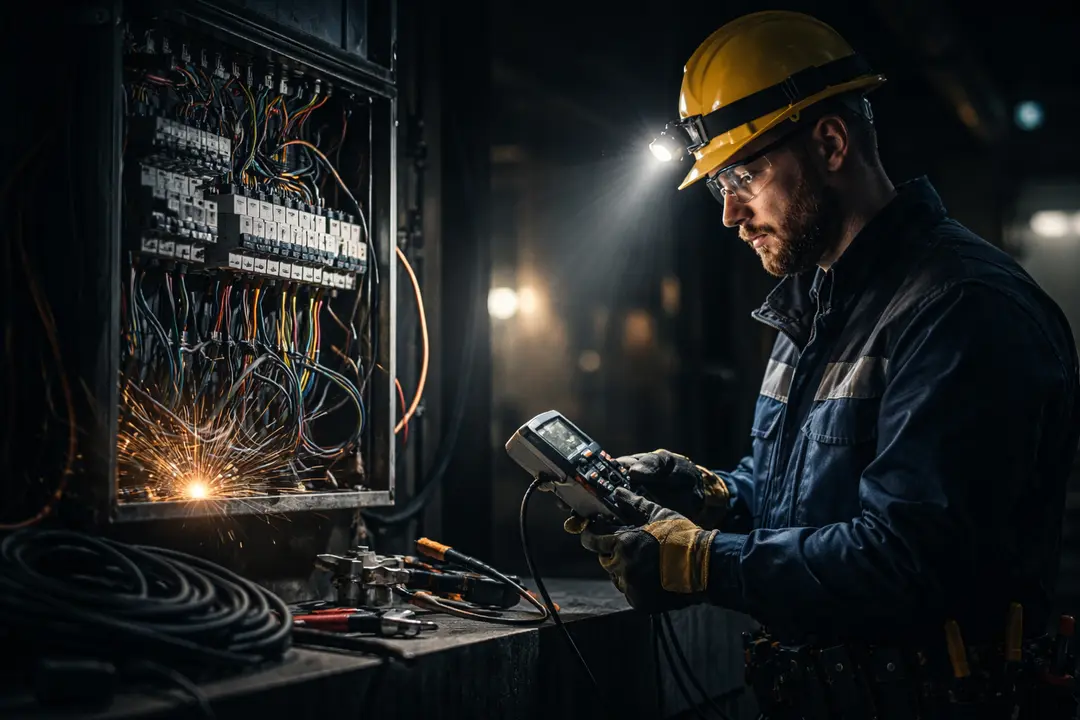
Home Rewiring Las Vegas | Professional Whole-House Electrical Upgrades
Your 1970s wiring wasn't designed for dual AC units, electric vehicles, and modern appliances. The electrical infrastructure in older Las Vegas homes degrades faster than anywhere else in the country. Attic temperatures exceeding 150°F accelerate insulation breakdown, creating fire hazards.
Residential Wiring Services for Every Generation of Home
We rewire homes throughout Las Vegas—from 1950s downtown homes with cloth wiring to 1980s Summerlin homes with aluminum circuits. Every home presents unique challenges. All Vegas homes suffer from extreme attic heat damage.
Whole-House Rewiring & Safety Modernization
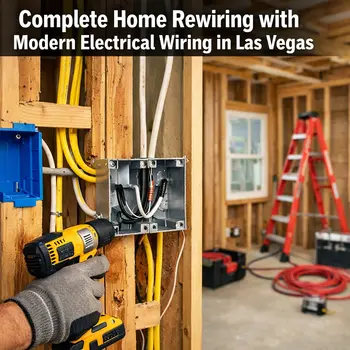
Whole-house rewiring replaces your electrical distribution from panel to every outlet and fixture. We install modern Romex NM-B cable rated for 90°C with proper copper grounding. We install AFCI protection on bedroom circuits. We provide GFCI protection near water sources.
We fish new circuits through walls and attics to minimize drywall damage. Most rewires take 5 to 7 days.
We install adequate circuit capacity. Bedrooms get dedicated 15-amp circuits. Kitchens get two 20-amp small appliance circuits plus dedicated circuits for major appliances.
Targeted Rewiring for Kitchen & Bathroom Remodels
Kitchen and bathroom remodels require updated electrical systems. Your 1980s kitchen has one 20-amp circuit. Modern code requires two separate 20-amp circuits. Your microwave needs a dedicated circuit. Your dishwasher needs a dedicated circuit.
We install properly sized circuits with 12 AWG copper for 20-amp service. We install GFCI protection. We verify voltage drop doesn't exceed 3% by upsizing conductors when necessary.
Bathroom circuits require GFCI protection for all receptacles. We install dedicated 20-amp circuits for high-demand devices.
Safe Replacement of Aluminum & Knob-and-Tube Systems
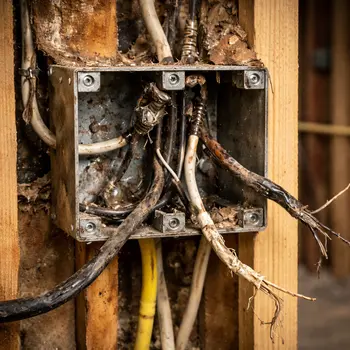
Aluminum branch-circuit wiring was installed in Las Vegas homes from 1965 to 1973. Aluminum has higher thermal expansion than copper. It expands when current flows, loosens terminal screws, then contracts. This cycle creates loose connections that create resistance, heat, and eventually arcing. Many insurers refuse coverage or charge higher premiums.
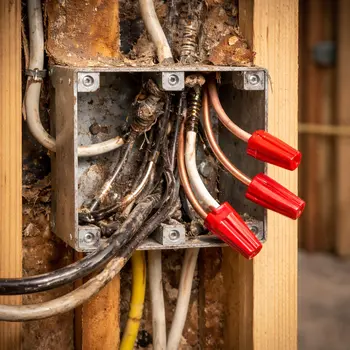
We offer two solutions. Complete rewiring replaces all aluminum with copper. Copper pigtailing uses AlumiConn connectors to transition from aluminum to copper pigtails at every device.
Knob-and-tube wiring has no ground conductor. We remove all knob-and-tube and install modern grounded circuits.
Dedicated Circuit Installation for High-Demand Appliances
Modern appliances require dedicated circuits. Your electric range needs a 40 or 50-amp circuit. Your dryer needs a 30-amp circuit. Your microwave needs a 20-amp circuit.
We install these circuits with proper wire sizing. A 50-amp range circuit requires 6 AWG copper. A 30-amp dryer circuit requires 10 AWG copper. We install appropriate overcurrent protection and verify proper grounding.
Signs Your Las Vegas Home Needs Immediate Rewiring
Electrical systems degrade over time. These warning signs indicate dangerous conditions requiring immediate attention.
Brittle Insulation & Heat-Damaged Wiring in the Mojave Climate
Las Vegas attics reach 150°F to 160°F from June through September. This degrades wire insulation. PVC jackets on NM cable become brittle. Rubber insulation crumbles. When you touch the wire, insulation breaks away, exposing bare copper.
We find this in almost every home over 30 years old. Attic wiring fails from thermal stress.
Heat-damaged insulation creates shock hazards and fire risks. Exposed conductors can contact metal boxes, creating ground faults. Multiple circuits can have exposed conductors that touch, creating shorts.
If you see crumbling insulation, the entire attic needs rewiring.
Identifying Overloaded Circuits & Persistent Breaker Trips
Breakers that trip frequently indicate overloaded circuits. Your 15-amp bedroom circuit can't safely handle a window AC, space heater, and laptop simultaneously. Your single kitchen circuit can't handle a microwave, toaster, and coffee maker at once.
Flickering lights when the AC starts indicate undersized circuits or poor connections. When a large motor draws starting current, voltage drops. This dims lights on the same circuit. If voltage drop exceeds 3%, you need heavier gauge wire.
An ozone smell near outlets indicates arcing. Ozone has a sharp, metallic smell. If you smell ozone, shut off power immediately.
Discolored outlets or warm wall plates indicate overheating connections. Brown or black marks show heat damage. These conditions require immediate repair.
Our Technical Process: Ensuring Code Compliance & Safety
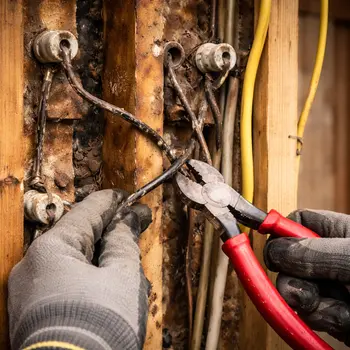
We follow the 2023 NEC as adopted by Clark County. We pull permits for all rewiring work. We coordinate inspections and ensure first-time pass.
Converting Ungrounded Outlets to Modern 3-Prong Systems
Older homes have two-prong outlets with no equipment ground. We provide three options.
Option 1: Run new grounded circuits from the panel. We install 14 AWG or 12 AWG Romex with ground conductors to each outlet. This provides true equipment grounding.
Option 2: Install GFCI protection without ground. We install GFCI receptacles on ungrounded circuits. The receptacle face shows "No Equipment Ground" per code. GFCI prevents shock hazards even without ground.
Option 3: Retrofit ground wires where accessible. We run separate ground conductors from outlets back to the panel or to nearby grounded metal water pipes.
Precision Wire Sizing & Voltage Drop Prevention
We calculate voltage drop on all circuits exceeding 50 feet. For a 20-amp circuit at 100 feet using 12 AWG copper, voltage drop is 6.6%. This exceeds the 3% maximum. We upsize to 10 AWG reducing voltage drop to 4.2%. For critical circuits, we use 8 AWG to achieve less than 2%.
Proper wire sizing prevents motors from overheating, lights from dimming, and electronics from malfunctioning. We size every circuit for actual load plus voltage drop considerations.
Frequently Asked Questions: Electrical Wiring in Las Vegas
How much does a whole-house rewire cost in Las Vegas for 2026?
Whole-house rewiring costs $8,000 to $15,000 for a typical 1,500 to 2,000 square foot home. Homes with finished basements, concrete slab construction, or multiple stories cost more. Homes requiring panel upgrades add $3,000 to $5,000. Homes with aluminum wiring requiring complete copper replacement run $12,000 to $18,000. Costs include materials, labor, permits, and inspections. Price includes patching drywall but not final painting.
Can I rewire my home in sections?
Yes, but each section requires a separate permit and inspection. Most homeowners rewire by room or floor. You might rewire bedrooms this year and living areas next year. Each phase must be completed to code and pass inspection. We recommend prioritizing areas with severe degradation—typically attic circuits serving upstairs rooms. Kitchen and bathroom circuits should be high priority. We can assess your home and recommend a logical phased approach. Each phase typically takes 2 to 4 days.
What are the specific risks of 1970s aluminum wiring in the desert?
Aluminum wiring fails faster in Las Vegas than cooler climates because thermal cycling is more extreme. Daily temperature swings of 30 to 40 degrees cause repeated expansion and contraction. Aluminum expands 33% more than copper per degree of temperature change. Over decades, this loosens every termination. The phenomenon is called "creep"—aluminum flows under mechanical pressure at elevated temperatures, reducing contact pressure at terminal screws. Las Vegas attics reaching 150°F accelerate this process. Loose connections create resistance. Resistance creates heat. This thermal runaway leads to arcing and fire. Most aluminum wiring fires occur at receptacles, switches, and junction boxes where terminations experience the most stress. Insurance companies classify aluminum wiring as a significant fire risk.