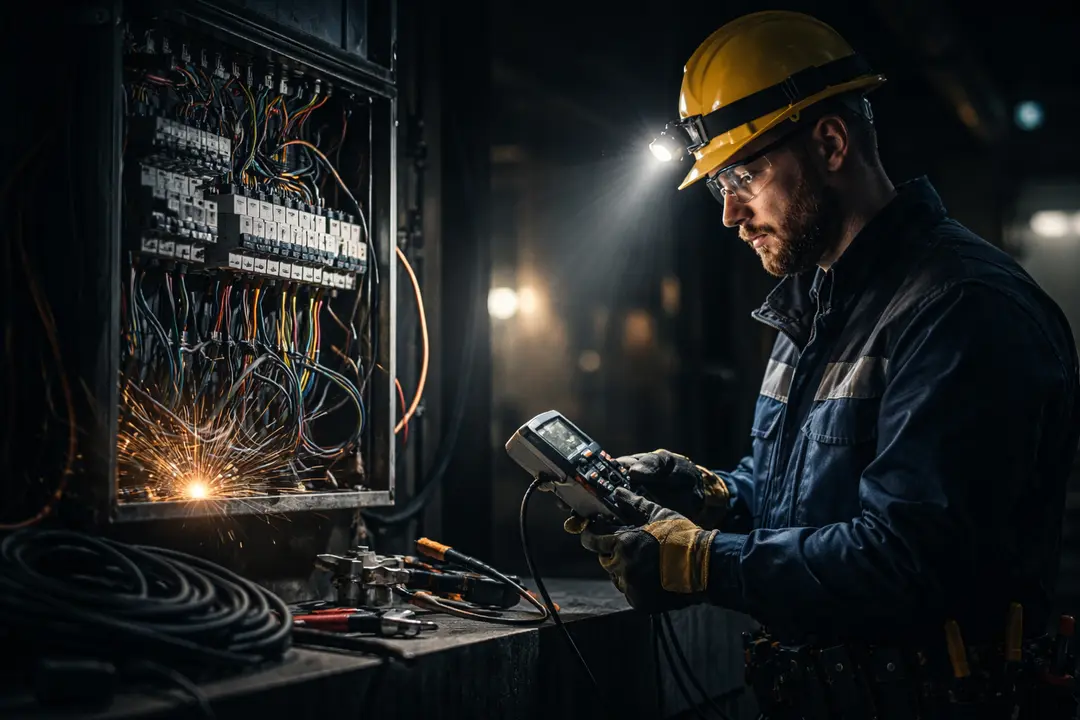
Commercial Electrician Las Vegas | Reliable Power for Your Business
Your business runs on electrical stability. When power fails in Las Vegas, you lose revenue and operational efficiency.
Specialized Electrical Contracting for Las Vegas Facilities
Commercial facilities in Las Vegas operate under conditions that destroy standard electrical components. Rooftop HVAC units run continuously from May through October. Your electrical system handles continuous loads that residential infrastructure was never designed to manage.
We design three-phase power distribution systems for commercial properties. We perform voltage drop calculations for long conduit runs. We install bus duct systems for high-amperage applications. We conduct power quality analysis to identify harmonic distortion.
Tenant Improvements & Office Build-Outs
Tenant improvement projects require reconfiguring electrical infrastructure. Your base building might have 120/208V service, but your tenant needs 277/480V. Your panel might be maxed out with no room for additional circuits.
We design electrical distribution for new tenant spaces. We install subpanels to separate tenant loads. We calculate load requirements and coordinate with Clark County inspectors.
Office build-outs require dedicated circuits for copiers, servers, and equipment. We install isolated ground receptacles for IT equipment.
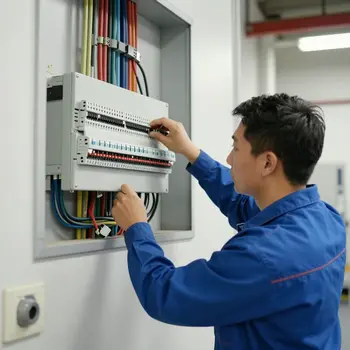
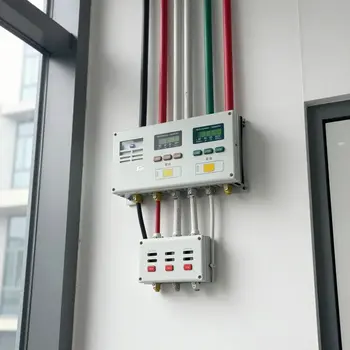
Three-Phase Power Installation & Maintenance
Three-phase power is mandatory for commercial motors and high-capacity HVAC. A balanced three-phase load reduces current and prevents overheating. Unbalanced loads cause one phase to carry excessive current, damaging equipment.
We install 120/208V and 277/480V three-phase systems. We balance loads across phases to within 10% variance.
Commercial kitchens need three-phase for ovens and dishwashers. Warehouses need three-phase for motors. Retail spaces need three-phase for rooftop units.
Power factor correction reduces reactive power draw. We install capacitor banks to improve power factor above 0.95 for NV Energy rebates.
Commercial LED Lighting Retrofits & Energy Saving
LED retrofits reduce cooling loads in commercial buildings. Traditional fixtures generate heat that adds to HVAC load. LED reduces both lighting and cooling costs.
We calculate ROI on LED conversions. A warehouse retrofit pays for itself in 18 to 24 months. We install LED high-bay fixtures rated for 50,000+ hours.
Emergency lighting must remain functional during power failures. We retrofit exit signs with LED lamps that draw minimal current from battery backup.
Dedicated Circuits for Kitchens & Industrial Equipment
Commercial kitchens operate multiple high-draw appliances simultaneously. Your convection oven pulls 40 amps. Your fryer pulls 30 amps. Your dishwasher pulls 25 amps. If these share circuits, you'll experience phantom trips during peak service.
We install dedicated circuits for every major appliance. We size conductors for continuous duty at elevated ambient temperatures. Kitchen environments often exceed 100°F, which reduces wire ampacity.
Industrial equipment requires proper grounding to prevent equipment damage. We install equipment grounding conductors sized per NEC requirements. We verify ground continuity and measure impedance.
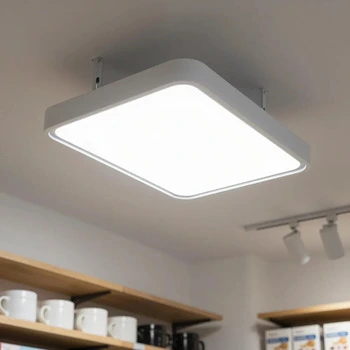
Minimizing Downtime with Strategic Electrical Maintenance
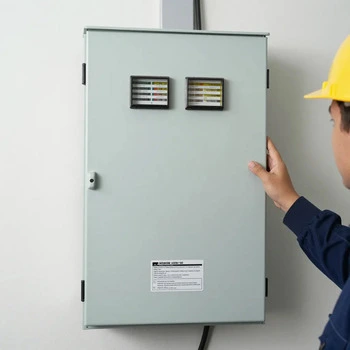
A thermal scan of your electrical panel costs $200. Replacing a burned-out panel after failure costs $20,000 plus lost business. Preventive maintenance identifies failures before they happen.
Preventive Inspections & Power Quality Analysis
We perform infrared thermal imaging on electrical panels, disconnects, and bus bars. Hot spots indicate loose connections or overloaded circuits. A connection running 40°F above ambient will fail within months. We tighten connections before failure occurs.
Power quality analysis identifies voltage sags, harmonic distortion, and transient surges. We install power monitoring equipment to track voltage stability and power factor. We identify which circuits cause disturbances and implement correction.
Clark County requires commercial facilities to maintain electrical systems in safe condition. Routine inspections verify code compliance.
Troubleshooting Intermittent Power Issues in High-Demand Environments
Intermittent power problems are hardest to diagnose. Equipment works fine for weeks, then suddenly fails. These problems usually involve thermal cycling or load-dependent failures.
We monitor voltage and current over time to identify patterns. A circuit that fails only on hot afternoons indicates a thermal issue. A breaker that trips only when specific equipment starts indicates inadequate overcurrent protection.
Loose lugs at breakers or bus bars create high-resistance connections. Under heavy load, these heat up and increase resistance. We torque all connections to manufacturer specifications.
Corroded bus bars in outdoor panels reduce current capacity. We replace corroded components and upgrade to NEMA-rated enclosures.
Compliance & Safety Standards for Clark County Businesses
Clark County enforces the National Electrical Code with local amendments. Your electrical work must pass inspection before you can open. We design systems that pass the first time.
Adhering to Nevada State Building & Fire Codes
Nevada adopted the 2020 NEC with state-specific modifications. Fire alarm systems must integrate with building electrical. Emergency power must activate within 10 seconds of utility failure.
Commercial kitchens require Type I hood systems with interlocked gas shutoffs and fire suppression. We coordinate electrical work with mechanical and fire protection contractors.
Outdoor electrical equipment requires NEMA 3R enclosures minimum. Meter bases, disconnects, and panels exposed to weather must be rated for outdoor use.
Emergency & Exit Lighting Compliance Testing
Nevada law requires emergency lighting in all commercial buildings open to the public. Exit signs must remain illuminated during power failures. Emergency lights must provide minimum illumination for 90 minutes.
We install and test emergency lighting systems per NEC Article 700. We verify battery backup systems maintain charge. We conduct annual tests and maintain documentation required for compliance.
Emergency lighting must activate automatically during power failure. We install self-contained battery fixtures or central inverter systems depending on building size.
Frequently Asked Questions: Commercial Electrical Systems
What is the benefit of a 3-phase power upgrade?
Three-phase power delivers 73% more capacity than single-phase using the same conductor size. A 100-amp single-phase service delivers 24kW. A 100-amp three-phase service delivers 41kW. Three-phase motors run smoother, cooler, and more efficiently. They don't need starting capacitors. Three-phase eliminates the power factor penalty associated with single-phase motors, reducing demand charges. For commercial facilities with multiple motors or industrial equipment, three-phase is mandatory. The upgrade cost pays for itself through reduced energy bills.
How can my facility reduce energy costs during peak Vegas summer rates?
NV Energy charges peak demand rates from 1 PM to 7 PM during summer. These rates can be triple off-peak cost. Reduce consumption during peak hours by: (1) Pre-cooling your building before 1 PM so HVAC runs less during peak. (2) Scheduling equipment operations outside peak times. (3) Installing LED lighting to reduce electrical load and heat generation. (4) Implementing power factor correction to reduce demand charges. (5) Installing occupancy sensors and programmable thermostats. A typical 10,000 sq ft space can save $500-800 monthly by shifting 20% of consumption outside peak hours.
Why are my circuit breakers tripping in a commercial kitchen setting?
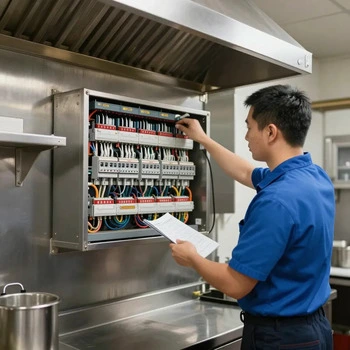
Commercial kitchen breakers trip for three reasons: (1) Multiple high-draw appliances on shared circuits. Each major appliance needs a dedicated circuit. (2) Breakers undersized for motor starting current. A convection oven pulls 6-8 times running current at startup. The breaker must handle this inrush. (3) Elevated ambient temperatures reducing breaker capacity. Breakers in 100°F+ environments can only carry 80-90% of rated load. We perform load calculations for your equipment, verify proper breaker sizing including temperature derating, and install dedicated circuits for each appliance.