Electrical Inspection & Troubleshooting Las Vegas | Diagnostic Experts
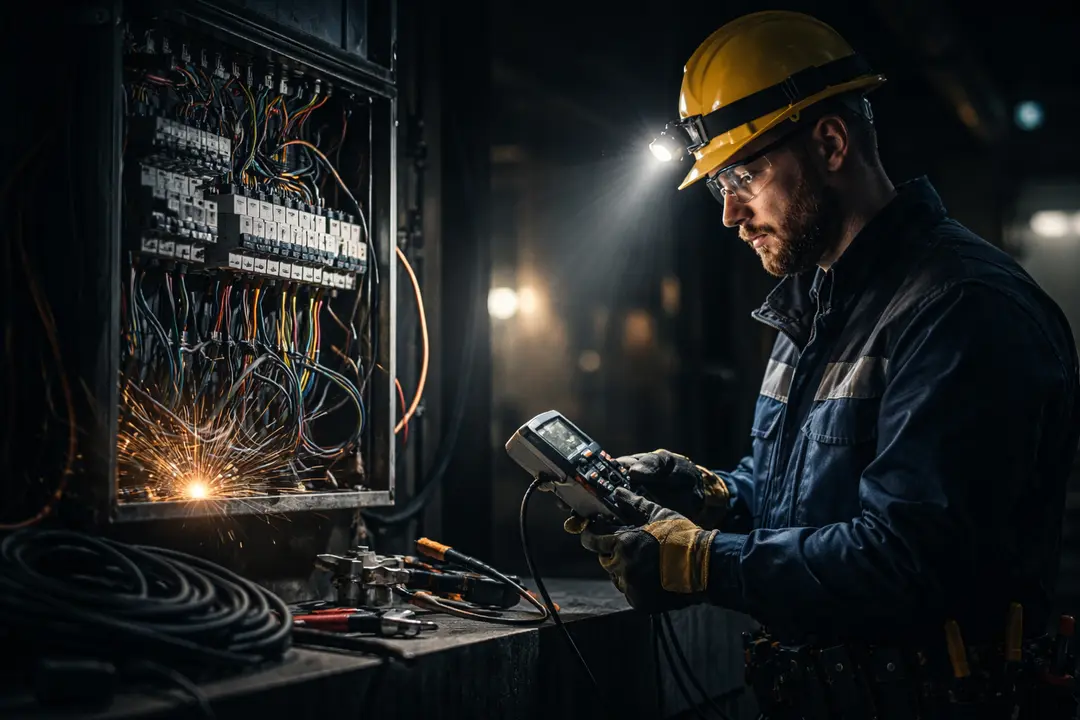
Guessing wastes time and money. Diagnostic testing finds the actual problem. Las Vegas electrical systems face unique stress—115°F heat causes thermal cycling that loosens connections, dual AC units create continuous load stress, and grid fluctuations expose weak infrastructure. We use thermal imaging, RMS voltage measurement, and systematic elimination to find problems other contractors miss.
Diagnostic Troubleshooting for Persistent Electrical Issues
We solve electrical problems that other contractors couldn't fix. Most electricians replace obvious components without testing the system. We measure voltage, test continuity, analyze load distribution, and use thermal imaging to find the actual failure point.
Identifying Arc Faults & Nuisance Breaker Tripping
Breakers trip for legitimate overloads or ground faults. Nuisance trips occur from circuits loaded at 85% capacity, hot breakers with reduced trip points, or high-resistance connections.
Series arcing occurs when a conductor develops a break but maintains intermittent contact. Parallel arcing occurs when conductors short through damaged insulation.
We test breaker operation using calibrated load banks. A 20-amp breaker should trip at 200% load within 2 minutes. Thermal-magnetic breakers have instantaneous magnetic trip at 10-20x rated current, and thermal trip at 125-200%.
AFCI breakers detect arc signatures by analyzing current waveforms. AFCI trips often indicate real problems.
Thermal Imaging for "Hot" Circuits & Loose Connections
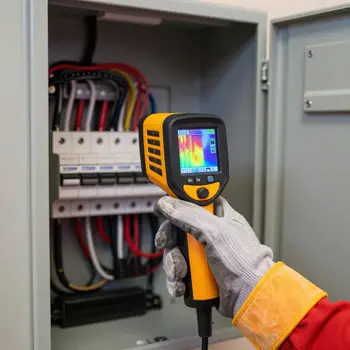
Infrared thermography reveals problems invisible to standard testing. High-resistance connections generate heat through I²R losses.
Las Vegas heat accelerates thermal failures. Daily thermal cycling—115°F during day, 85°F at night—causes terminal lugs to loosen. Aluminum wire expands 33% more than copper per degree, making aluminum terminations particularly susceptible.
We scan panels and major connection points with thermal cameras. Temperature differences of 20°F or more indicate problems. A breaker running 30°F hotter than adjacent breakers shows high resistance or internal failure.
Thermal imaging reveals heat signatures from downstream leakage current, allowing us to trace circuits and identify the source.
Solving Flickering Lights & Voltage Fluctuations
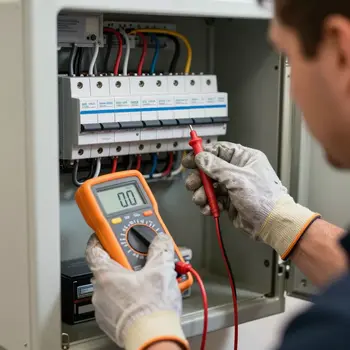
Flickering lights indicate voltage drop, loose neutral connections, or upstream supply problems. We measure RMS voltage at multiple points.
A properly functioning 120V circuit should measure 118-122V at outlets. Under full load, voltage shouldn't drop more than 3%. If voltage drops 8-10V when appliances turn on, the circuit has excessive resistance.
Partial power outages—where some circuits work while others don't—typically indicate lost leg of power or compromised neutral. Residential service provides 240V split phase: two 120V legs and a neutral. If one leg fails, half your circuits lose power.
We test voltage leg-to-leg (should be 240V) and each leg-to-neutral (should be 120V each). If we measure 180V on one leg and 60V on the other, the neutral is compromised.
Compromised neutrals are dangerous. Appliances expecting 120V may receive 150V or 90V depending on load distribution.
2026 Clark County Code Compliance & Safety Audits
Clark County adopted the 2023 NEC effective January 11, 2026. Key changes affect surge protection, AFCI requirements, and grounding systems.
Mandatory Surge Protection & AFCI Updates (2023 NEC)
The 2023 NEC requires Type 1 or Type 2 Surge Protective Devices (SPDs) on service equipment during new installations or service upgrades. This became enforceable in Clark County on January 11, 2026.
Type 1 SPDs install on the line side of the main breaker. Type 2 SPDs install on the load side. Both provide whole-home surge protection.
Las Vegas experiences significant monsoon activity July through September. SPDs clamp voltage transients above 600V, preventing damage to electronics and appliances.
We install SPDs rated for 40kA minimum surge current. SPDs include indicator lights showing operational status.
AFCI protection expanded under 2023 NEC. All 15-amp and 20-amp circuits require AFCI protection, including lighting circuits.
Real Estate Point-of-Sale Electrical Inspections
Home sales trigger electrical inspections. We perform assessments documenting panel condition, grounding systems, and code compliance.
Inspections identify Federal Pacific and Zinsco panels common in 1960s-1980s Las Vegas homes. These panels have documented failure modes. Buyers typically request replacement.
We test all GFCI outlets. Devices over 10 years old often fail. Aluminum wiring requires documentation.
Main Service Panel & Grounding System Evaluation
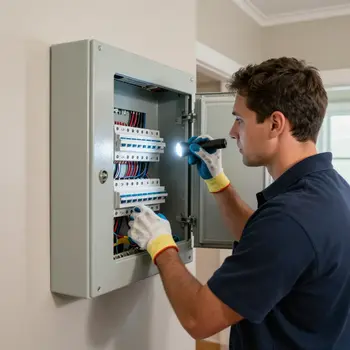
We evaluate panel capacity, bus bar condition, and breaker operation. We open panels, inspect terminations, and test connection tightness.
Bus bar corrosion occurs in garages and outdoor panels. Corroded bus bars create high-resistance connections. We document corrosion and recommend panel replacement when extensive.
Ground resistance should be below 25 ohms. We install supplemental ground rods when necessary.
The Mojave Factor: Troubleshooting Heat-Related Failures
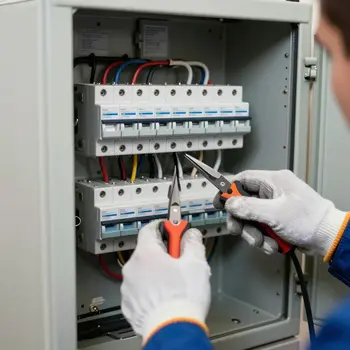
Las Vegas heat creates electrical failure modes not seen in temperate climates. Understanding these patterns allows us to diagnose problems other contractors miss.
Attic Wiring Degradation & Insulation "Dry Rot"
Attic temperatures reach 145°F to 160°F from June through September. This degrades wire insulation. PVC jackets become brittle. Rubber insulation crumbles.
Brittle insulation breaks when touched, exposing bare conductors. Multiple circuits can have exposed wires creating shorts.
Thermal cycling accelerates failure. Daily temperature swings of 40-50°F cause continuous expansion and contraction. Insulation develops micro-cracks.
We use thermal imaging to identify overheating circuits before insulation fails. Circuits running 30-40°F above ambient indicate problems.
AC Compressor Circuit Stress & Capacitor Testing
AC compressors are the highest-demand loads in Las Vegas homes. A 3-ton AC draws 15-20 amps continuously. Compressor circuits run 4,000+ hours annually.
Locked rotor current during startup reaches 60-90 amps. This stresses breakers and connections. High-resistance connections create voltage drop, preventing compressors from starting.
We measure voltage at the disconnect during startup. Voltage should drop no more than 5%. Drops exceeding 10% indicate problems.
Capacitors fail in Las Vegas heat. We test capacitors under load. Capacitors testing below 80% of rated value need replacement.
FAQ: Electrical Inspections in Southern Nevada
How much does a diagnostic visit cost in Las Vegas?
Diagnostic service calls cost $150 to $250 depending on problem complexity. This includes arrival, initial testing, and diagnosis. If we identify the problem and you approve repairs immediately, we credit the diagnostic fee toward repair costs. Complex diagnostics requiring thermal imaging or extensive circuit tracing may cost $250 to $400. We provide written diagnostic reports documenting findings and repair recommendations.
Why do some of my outlets work while others don't?
Partial power loss typically indicates lost leg of power or a tripped breaker feeding multiple outlets. Residential service provides two 120V legs. If one leg fails at the transformer or service entrance, half your outlets lose power. We test voltage at the panel to determine if both legs are functioning. If one leg shows zero volts, the problem is upstream. If both legs show proper voltage, the problem is a tripped breaker, failed connection, or damaged wire feeding the dead outlets.
Does the 2026 code require me to upgrade my surge protection?
The 2023 NEC adopted by Clark County on January 11, 2026, requires Type 1 or Type 2 SPDs on new installations and service upgrades. Existing homes without SPDs are grandfathered—you're not required to add surge protection unless performing service upgrades requiring permits. However, SPD installation is recommended. Las Vegas monsoon lightning damages electronics, HVAC controls, and appliances. Whole-home surge protection costs $300 to $600 installed and prevents thousands in damage from lightning-induced transients.